A Scientist’s Approach to Mutual Value Creation

December 2025 | Economics of Mutuality Experts Series
A Conversation with Geert De Meyer
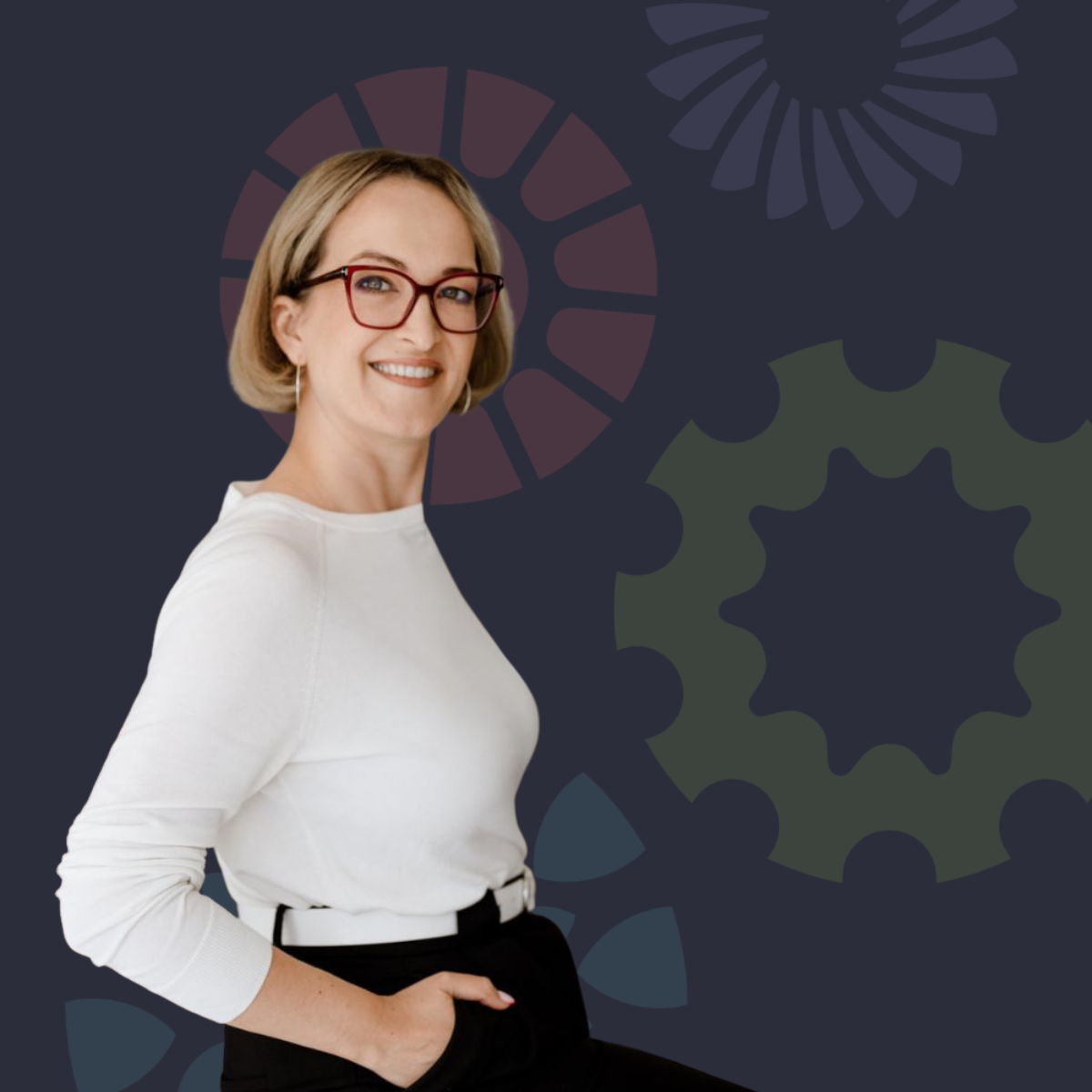
Geert De Meyer spends his days at the intersection of data, science, and pet health. As Science Data Analytics Lead at Mars Petcare, he leads work that explores everything the business can improve or invent in nutrition and health for pets, across food brands, diagnostic services, and veterinary hospitals. It is, as he puts it, “quite a broad and exciting job.”
Behind that role is an unusual professional path. Geert has worked his entire career in life sciences R&D across human health care, diagnostics, pharma, vaccines, and agricultural research in plant breeding and plant biotech. He explains that he has a dual educational background, with studies in life sciences and formal training in statistics. His work has ranged from organizing field trials to designing predictive models and clinical studies, all aimed at understanding how systems behave and where they can work better.
Learning the Mechanics of Mutuality
That systems mindset shaped how Geert encountered the Economics of Mutuality. When he enrolled on our Leading With Purpose virtual executive education program, he found “an approach, a strategy, where you align doing good with doing business.”
The course, he says, “looks at your personal motivation, your leadership skills, your storytelling skills,” and these are “important things to put the theory that you learn into practice.” For Geert, “the combination of theory and practical application is really the heart of the course, and it is what I appreciated a lot.”
One insight in particular stayed with him. “If you want to do good business you have to do good in general. This is solving problems, solving pain points for people,” he reflects. That is not a solo effort. “You don't do that just on your own. You do that in an ecosystem.” It means recognizing who must act first, and where collaboration is essential.
Stepping Onto the Balcony
The program also shifted how Geert thinks about his own leadership. Drawing on adaptive leadership ideas, he now makes a deliberate effort to step back and observe. “I get much more on the balcony in my day-to-day work,” he says. Rather than treating each project as a one-off event, he looks at broader patterns and team dynamics.
In problem solving sessions he now asks himself, “Who else could we invite to the table?” That includes people beyond his immediate team or even beyond Mars. “There might be people that should be invited who are not part of my company or are not part of my team. It’s important to broaden the group.”
In a large organization the default assumption is often that everything required is already inside the building. Geert is quietly challenging that instinct, making more space at the table and treating collaboration as a practical route to mutual value.
Rethinking Pet Health as an Ecosystem
Much of Geert’s team’s work sits in pet health, which he describes as “a very specific setting.” Compared to human health, the field has seen much less investment. It also exists almost entirely in the private sector, with far fewer policies defining or supporting care. That creates both challenges and possibilities. “There's so many things that we can still make better in that space, both for the pets, the pet owners, but also for the veterinarians involved,” he says.
One area is the translation of well-established human health strategies into the world of dogs and cats, particularly around prevention. He points to “preventative oral care or disease prevention more generally,” observing that this mindset is “not that ingrained yet in pet health.” The science is available. The work now is to design business models that can make it real in practice, decide who participates, and think through how benefits are shared.
A “Cookbook” for Purpose
Geert’s interest in responsible business is linked to his personal values. For much of his career that motivation sat under the surface as he moved between corporates and biotech startups, where purpose statements often felt like “mostly a slogan really, to just inspire employees or stakeholders, but don’t really mean anything concrete.”
Joining Mars about seven years ago changed that. He discovered the Five Principles that guide the company, including mutuality. Everyday exchanges between Mars and its customers or suppliers are framed as shared benefits.
What struck him was the difference between Mars and many of the companies he had seen before. “Instead of like what I've seen in many other companies where it's just a slogan on the wall, it's real in everyday types of conversation. Mutuality is just part of what you do every day.”
Even with a strong purpose, though, he felt there was still something missing. “You might have that purpose, but still you need a bit of “technique”, a solid approach you can follow,” he says. The Economics of Mutuality provided that missing piece. “That recipe is what I've learned in the Economics of Mutuality course. So to me that's like the “cookbook” of how to do it.”
Growth as Solving Pain Points
Looking ahead, Geert thinks like a scientist about the future of business. He finds the underlying mechanics of mutuality compelling, in contrast with a more traditional growth mindset focused on selling more units or pushing harder on marketing. “You're not bringing a better solution, you're just selling more products.” He would like to see the hypothesis tested properly. “If you solve more pain points, is that not the best way to generate more sustainable growth?”
This curiosity also extends to measurement. In the course, he observed that mutuality is often tracked through point-in-time surveys. In a world of big data, he wonders what might be possible with continuous, ecosystem-wide measurement. He imagines tools that could help organizations see how stakeholders are doing, whether pain points are being eased or deepened, and how quickly conditions are changing, almost in real time.
For now, Geert is content to work with the “cookbook” he has discovered through the Economics of Mutuality. Whether inside Mars or elsewhere, he plans to keep asking the same questions: Whose pain points are we solving? Who else should be at the table? How can growth and mutual benefit move together?
Serendipity played a role in bringing him to this point. “I didn't sign up for the course. My boss did.” he says with a smile. Accidentally or not, it has given Geert new language, new tools, and renewed determination to use his skills in data and science to help build business ecosystems where everyone can thrive.
Are you a leader with a deep conviction that business should be a force for good? Our Leading With Purpose executive education program could for you.
Delivered online over 9-weeks, the course is grounded in the practical Economics of Mutuality operating model, which has been developed with leading companies and universities including Mars and Oxford University’s Saïd Business School.
Since its inception, it has helped over 500 senior business leaders and investors integrate social and environmental impact into their core business strategy.
Applications are open for our 2026 cohort! Find out more via link below.
Program dates: April 20 – June 26
Application deadline: March 20
If you want to speak to a member of our team about joining the program, please contact Liam Sharkey at liam.sharkey@mutualvaluelabs.com