Applying the Economics of Mutuality Across Industries

January 2026 | Economics of Mutuality Experts Series
A Conversation with Annette Bernsten
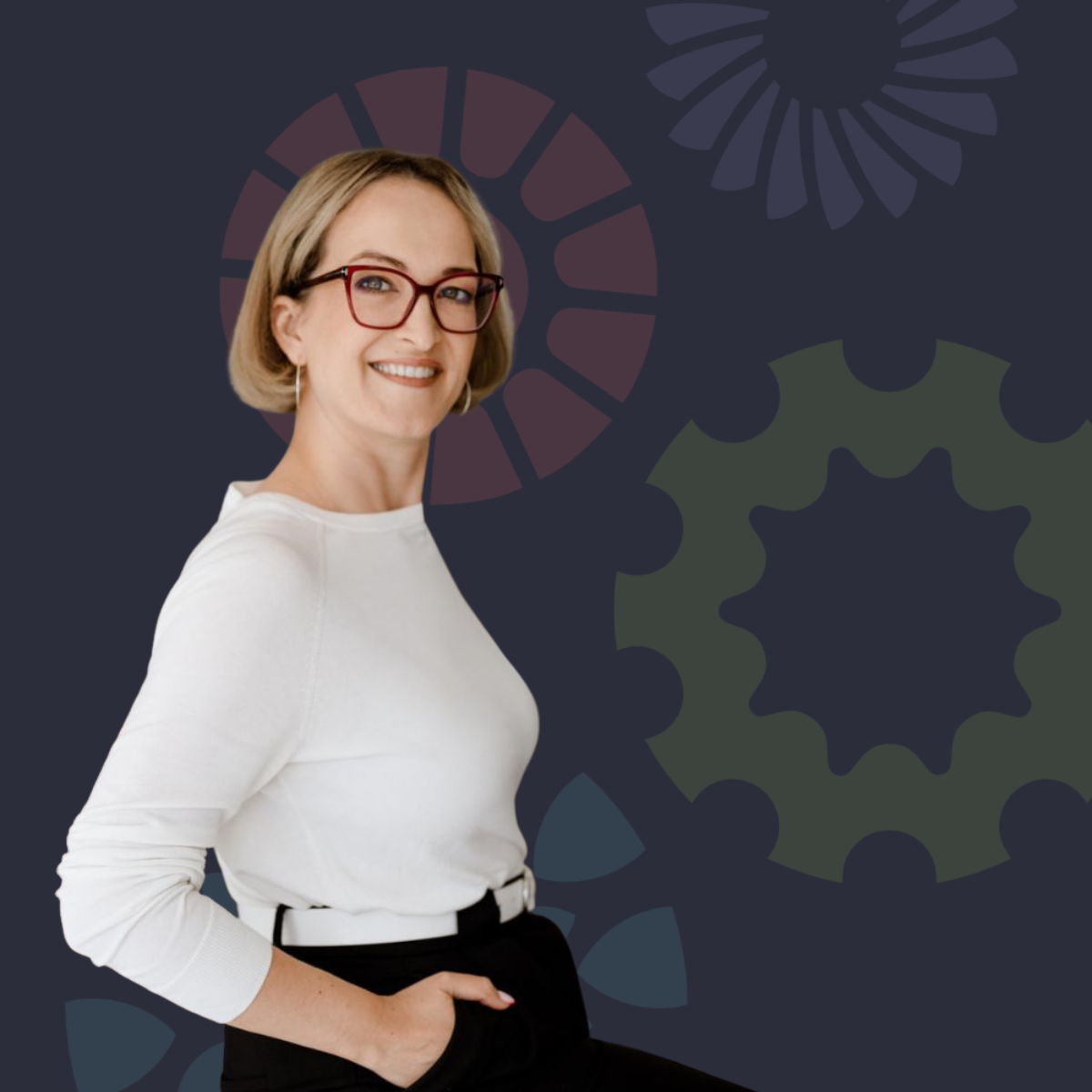
Annette Berntsen's career spans two very different industries.
First, the life sciences sector, where purpose is often embedded in business models thanks to the direct link between commercial success and improved health outcomes. Then the aquaculture industry, where Annette now works in Business Development at Skretting, a global leader in aquafeed, which is still in the early stages of exploring how purpose fits into its commercial priorities.
Her journey offers a clear view of what it takes to carry purpose across industries and what happens when it’s no longer a given, but something that must be actively built.
A New Chapter Beyond Pharma
After two decades in the pharmaceutical industry, Annette had built a career most people would have been content to continue. She had spent five years scaling a successful rare disease unit across the Nordics, delivering both commercial results and meaningful patient impact.
Yet rather than settling into that success, she found herself questioning what came next. Fresh from completing an MBA and increasingly interested in how businesses create value beyond financial performance, she began to ask whether the sense of purpose she had found in pharma could be applied elsewhere. Her transition into aquaculture - specifically into the world of novel ingredients - was both intentional and eye-opening. “I wanted to test if it was possible to do purpose-driven work in an entirely different industry,” she explains. What she found was a profound gap. “It took me a while to realize we weren’t even speaking the same language,” she admits. “I went from a sector where purpose was the currency, to one where it felt like a foreign concept.”
She quickly learned that purpose was not a universally understood or accepted concept across industries. In life sciences, it had been tied closely to health outcomes, regulatory obligations, and patient impact. In aquaculture, where business models often prioritize efficiency and scale, the idea of mutual value required translation, reframing, and persistence.
Bridging the Gap with Practical Tools
This gap inspired Annette to seek out frameworks that could help her bridge it. On the recommendation of a mentor, she joined the Leading With Purpose program - an experience she describes as “mind-blowing.”
Unlike the abstract, values-first thinking she had championed earlier in her career, the course provided her with pragmatic tools and a structured framework to communicate purpose in business terms. “It helped me move beyond gut feeling,” she says. “Now I can articulate the economics of mutuality approach to finance professionals - and make a business case for human and social capital.”
In her current role, Annette faces a market full of family-run, profit-driven fish farms, many of whom operate on tight margins and short horizons. These are businesses where success is often measured in daily yield and cost per kilo, not long‑term resilience or mutual value creation. They face constant pressure from price fluctuations, environmental regulations, and disease management, which leaves little room for strategic reinvention. With limited access to capital and low tolerance for risk, many are focused on staying afloat rather than transforming how they operate. “They see the oncoming challenges, but there’s no urgency right now. And when the price of salmon goes up, consumers switch to chicken,” she explains. “Purpose has to be more than a tagline, it needs to shift mindsets across the value chain.”
Shifting Mindsets in a Traditional Sector
That’s where the program came in. “The mutual value creation map we explored was incredibly helpful. It helped me visualize where we are, who the key actors are, and how to communicate to each one,” she says. “It gave me language and legitimacy.”
While she acknowledges the cultural conservatism of the aquaculture sector, she remains optimistic. “There are movements,” she says. “The younger generation is asking questions. Retailers are being pushed on transparency. And that means there are opportunities.”
Above all, she credits Leading With Purpose with deepening her own clarity. “It’s not just a course - it’s a mindset shift. It helped me go from feeling out of sync to becoming more professional, more efficient, and, hopefully, more persuasive.”
Annette’s experience shows that even in sectors where purpose isn’t the norm, a clear framework, and the willingness to lead differently, can lay the groundwork for meaningful change.
Are you a leader with a deep conviction that business should be a force for good? Our Leading With Purpose executive education program could for you.
Delivered online over 9-weeks, the course is grounded in the practical Economics of Mutuality operating model, which has been developed with leading companies and universities including Mars and Oxford University’s Saïd Business School.
Since its inception, it has helped over 500 senior business leaders and investors integrate social and environmental impact into their core business strategy.
Applications are open for our 2026 cohort! Find out more via link below.
Program dates: April 20 – June 26
Application deadline: March 20
If you want to speak to a member of our team about joining the program, please contact Liam Sharkey at liam.sharkey@mutualvaluelabs.com