How to Grow Without Betraying Your Purpose

January 2026 | Economics of Mutuality Experts Series
A Conversation with Hilde Sjo Tavares
Hilde Sjo Tavares did not join the Leading With Purpose executive education program because she needed convincing about the importance of purpose in business.
Quite the opposite. Purpose has been the throughline of her career, from healthcare and entrepreneurship to her current role at BRIGHT Products, a Norwegian company delivering solar-powered lamps and energy solutions to humanitarian and emergency settings around the world.
What brought her to the program was a different challenge: how to grow commercially without losing what makes the business meaningful.

Sol lamp
When Purpose Comes First and Growth Must Follow
Since its founding in 2011, BRIGHT has been deeply rooted in humanitarian impact. Its first product, the SunBell, became a core relief item for UNHCR, and over the past decade the company has delivered more than 4.3 million solar products, reaching over 17 million people across 60 countries.
For years, this humanitarian focus anchored the business model. But as Hilde explains, reliance on a single tender-based system created vulnerability. Delays and pauses in procurement cycles revealed that, while the company’s purpose was strong, it didn’t automatically translate into commercial resilience.
“We’ve always been an impact-driven company,” she says. “Now the question is how we open new markets and channels beyond humanitarian aid, including B2B and eventually B2C, without compromising who we are.”
This is where a mutual value creation approach becomes not just helpful, but essential.
Mutual Value as a Growth Strategy
What resonated most strongly for Hilde in the Leading With Purpose experience was the reframing of value creation. Rather than positioning commercial growth and values-based selling as opposing forces, the Economics of Mutuality approach treats them as interdependent.
At BRIGHT, this thinking already shows up in practice. The company designs products for durability and repairability, reducing electronic waste. Its solar lamp repair program equips local communities with tools, training, and spare parts, extending product life while building local capability. Environmental impact is measured across the full lifecycle, from design to end-of-life.
“These aren’t side projects,” Hilde notes. “They are part of how we create value. The challenge now is translating that into new commercial conversations and new customer segments.”
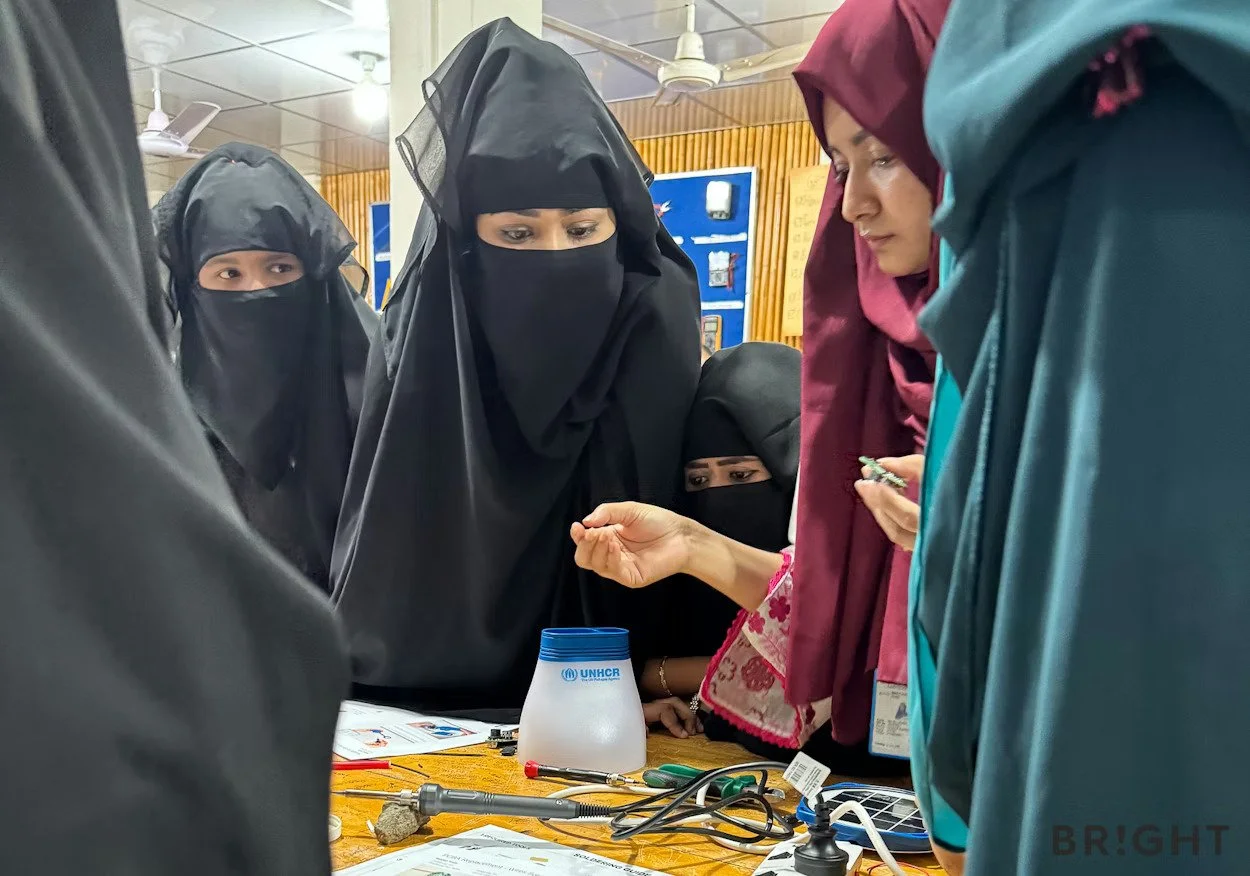
An instructor showing how to repair a BRIGHT solar lamp
From Impact Brand to Value-Based Selling
One of the most delicate transitions Hilde is navigating is internal. BRIGHT’s people joined the company because of its humanitarian mission. Shifting toward a broader commercial mindset requires care, trust, and language that reassures rather than alienates.
“There’s sometimes an unspoken fear that selling means selling out,” she says. “But you can be commercial and still do value-based selling. In fact, you have to be, if you want impact to last.”
This is where mutual value creation becomes a leadership tool as much as a strategy. It provides a shared process that helps teams see how commercial discipline sustains purpose, rather than undermines it. It also supports more confident storytelling, internally and externally, about why growth is not a betrayal of values, but a commitment to scaling them.
Leading With people, Not Just Plans
Hilde’s background in health and human-centered leadership shapes how she approaches change. Strategy matters, but only if people are ready to carry it.
“You can have the perfect plan,” she reflects, “but real progress truly hinges upon people being ready to embrace it. If you don’t take people on the journey and really help them understand the path ahead, then it just won’t happen.”
This insight aligns closely with the Leading With Purpose philosophy: transformation starts with leaders who can hold complexity and inspire others into that journey rather than forcing it. For BRIGHT, that means sequencing change thoughtfully and maintaining high sustainability standards, while shifting focus toward new markets and customers where mutual value can be unlocked.
A Different Starting Point and a Powerful Lesson
Most leaders come to Leading With Purpose searching for meaning. Hilde came with meaning already embedded and looking for a way to grow her organization without compromising it.
BRIGHT’s next chapter is about translating deep humanitarian purpose into a scalable, resilient commercial strategy. Through a mutual value creation approach, growth is no longer something in conflict with impact; it becomes a way of extending it, strengthening partnerships, and ensuring that access to sustainable light and energy can reach even more people, in even more contexts.
As Hilde puts it, “If we want to keep doing good in the world, we have to build a business model that can carry it forward.”
Are you a leader with a deep conviction that business should be a force for good? Our Leading With Purpose executive education program could for you.
Delivered online over 9-weeks, the course is grounded in the practical Economics of Mutuality operating model, which has been developed with leading companies and universities including Mars and Oxford University’s Saïd Business School.
Since its inception, it has helped over 500 senior business leaders and investors integrate social and environmental impact into their core business strategy.
Applications are open for our 2026 cohort! Find out more via link below.
Program dates: April 20 – June 26
Application deadline: March 20
If you want to speak to a member of our team about joining the program, please contact Liam Sharkey at liam.sharkey@mutualvaluelabs.com