October 2026 | Economics of Mutuality Experts Series
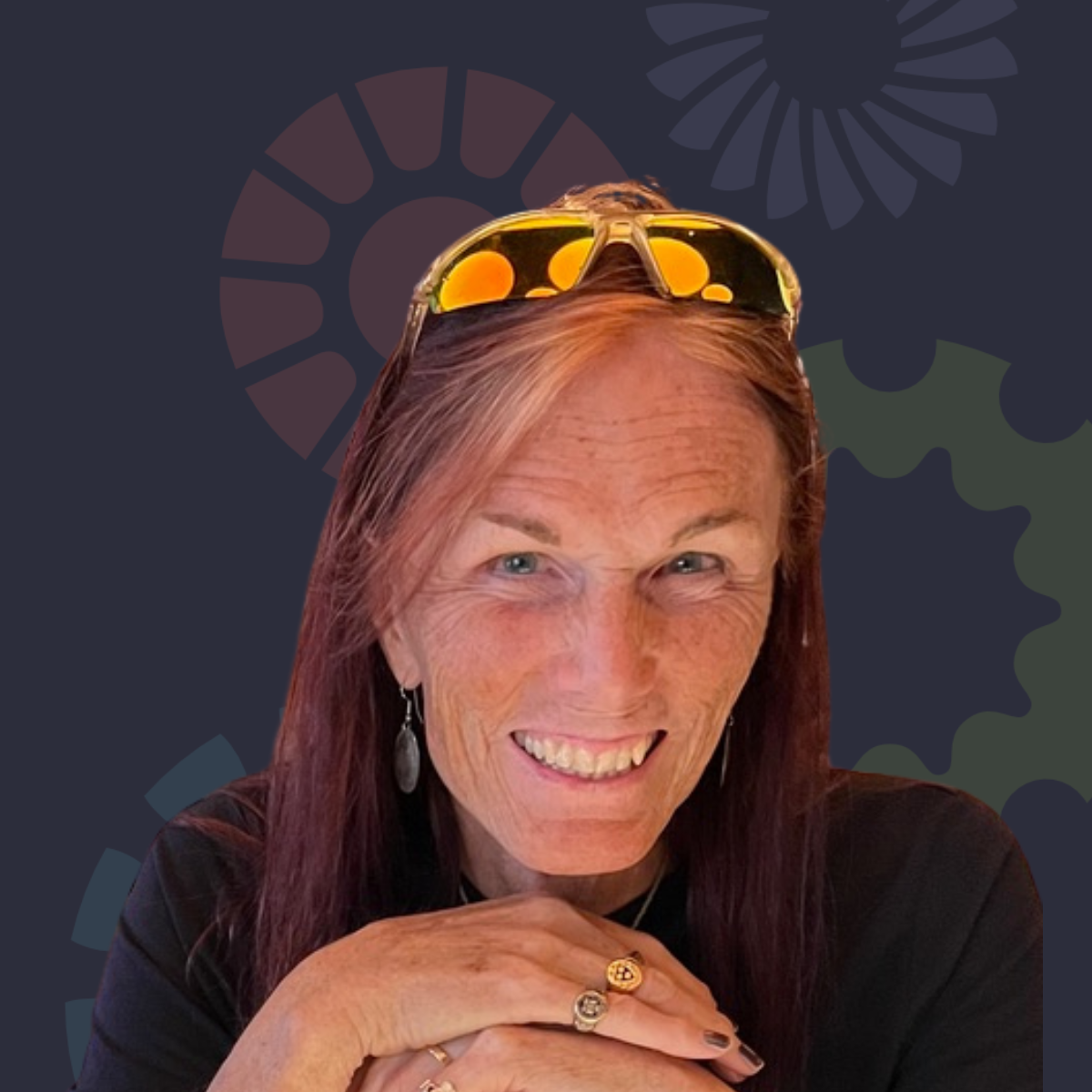
A Conversation with Kelly O’Brien
What does it take to build a business that creates value beyond profit? For Kelly O’Brien, entrepreneur, environmental engineer, and advocate for responsible business, the answer begins with purpose, values, and a commitment to making a difference.
Kelly O’Brien describes herself as retired, although her ongoing work suggests otherwise. Now based on the Hawai’ian island of Kaua’i, she continues to dedicate her time to advancing responsible business, supporting environmental initiatives, and helping educate the next generation of business leaders.
Her career has taken her from environmental engineering and emissions testing to entrepreneurship and academia. Throughout these experiences, one conviction has remained constant: businesses have both the opportunity and responsibility to contribute positively to society and the natural world.
Building a Business Around Values
Kelly’s interest in responsible business began long before it became a widely discussed concept. Early in her career, she worked in environmental engineering, addressing vehicle emissions, hazardous waste, and industrial pollution. These experiences shaped her understanding of the relationship between business and the environment, and the potential for companies to become part of the solution. That conviction eventually found practical expression when she co-founded Sensortech Services, a company that recycled single-use medical sensors collected from hospitals across the United States.
From the beginning, Kelly and her business partner shared a clear set of principles: care for employees, contribute to the community, and respect natural resources. Over 18 years, the company achieved financial success while supporting the wellbeing of its employees and their families. Looking back, Kelly recognises that they had built a responsible business without necessarily having the language to describe it.
Her experience reinforces a simple but important idea: positive impact and financial performance need not be competing priorities. When businesses create value by addressing real needs, both can reinforce each other over time.
Defining Purpose
Following the closure of Sensortech Services in 2017, Kelly became increasingly involved in education, particularly at California State University, Monterey Bay College of Business.
There, she helped establish the Responsible Business Innovation Lab, an initiative designed to deepen understanding of responsible business among faculty and students. For Kelly, one of the biggest challenges is translating good intentions into meaningful organisational practice. Her guiding philosophy is captured in a phrase she includes in all of her emails:
“Responsible Business by Design, Not… ‘by the Way.’ “
In other words, responsibility cannot remain a peripheral initiative. It must inform how an organization defines its purpose, makes decisions, manages resources, and measures success by looking beyond itself and what it does for others.
Kelly has been developing a framework she calls the Hierarchy of Strategic Intent, bringing together purpose, mission, vision, and values as the foundations of responsible management. At its centre is purpose. “It's your North Star,” she explains. “It's a statement that says why you're in business, what gets you out of bed in the morning.” But defining purpose is only the beginning. It must be supported by governance, management structures, and meaningful measures of impact.
This closely reflects the principles of mutual value creation: integrating commercial and impact imperatives into the core business model rather than treating them as separate objectives.
Seeing Beyond the Business
Kelly’s connection with the Economics of Mutuality approach developed through her studies at Oxford, where she explored its application in Kenya and the Philippines.
She subsequently joined our Executive Leadership Program, drawn by the opportunity to deepen her understanding and exchange experiences with other leaders.
What resonated particularly strongly was the emphasis on looking beyond the company itself to understand the wider ecosystem in which it operates. This shift in perspective can reveal opportunities for businesses to develop solutions that generate enduring value for multiple stakeholders.
She also sees particular potential among smaller, privately owned businesses, where leaders may have greater freedom to embed purpose and values directly into their organisations. For Kelly, the challenge now is making these approaches more accessible and widely practised.
A Continuing Commitment to People and Planet
Today, Kelly’s understanding of responsibility extends well beyond business. Living on Kaua’i has deepened her appreciation of the interdependence between communities and their natural surroundings. She supports local reef restoration efforts and regularly volunteers with a food bank, helping distribute food to people experiencing hardship. She also draws inspiration from the Hawaiian concept of Mālama ʻĀina — caring for the land and the place we call home.
At 79, Kelly sees little reason to step away from contributing. “Your retirement is not a death sentence,” she reflects, “nor is it a reason to stop giving what you can give.” Her continued involvement in education, community initiatives, and responsible business reflects the same values that guided her entrepreneurial journey.
Ultimately, Kelly’s story reminds us that responsible business is not simply a framework to adopt, but a way of thinking and acting. And perhaps its most important lesson is that creating enduring value begins with a choice: to place purpose at the heart of what we do, and to carry that commitment through into practice.