August 2026
By Alastair Colin-Jones, Executive Director at Mutual Value Labs, published on Sustainable Views
The organisations that succeed will be those that use sustainability to shape strategy and innovation, not simply improve operational performance
In a 2026 report, 84 per cent of sustainability decision makers described sustainability as a “value creation opportunity”.
That marks a significant evolution. Sustainability has long since moved from the margins of corporate strategy towards the centre of conversations about competitiveness, resilience and growth.
The next challenge is ensuring those decisions do not simply attempt to make today’s business model more resilient within a narrow definition of financial value creation.
If value creation has really become the defining language of sustainability, then it deserves much greater scrutiny.
One useful way of thinking about value creation is through the lens of mutual value: creating value by solving problems for people and the planet. Mutual value creation aligns financial and non-financial priorities so that long-term profit is created by improving outcomes for people and the planet.
This moves the conversation beyond balancing commercial and sustainability objectives towards designing business models in which the two become increasingly interdependent.
The distinction changes the starting point for strategy. Instead of beginning with environmental, social and governance targets or disclosure requirements, companies begin by asking a different question: what societal or environmental challenges are we uniquely positioned to solve? And how does genuinely seeking to solve those challenges actually change us as a business? This is the double materiality of mutual value.
Rather than treating sustainability as a function that mitigates risks and reduces negative impacts, it becomes both a lens and a discipline for discovering new opportunities for growth, innovation and resilience.
Business model innovation
The next phase of sustainability will be defined by whether organisations can innovate towards mutual value creation and build the capabilities of their leaders to achieve it.
That requires sustainability leaders to influence where companies choose to compete, the products and services they develop, the processes and business models they design, and the targets and partnerships they seek.
The organisations leading this shift have one thing in common: their greatest successes rarely came from asking how they can make their existing business more sustainable.
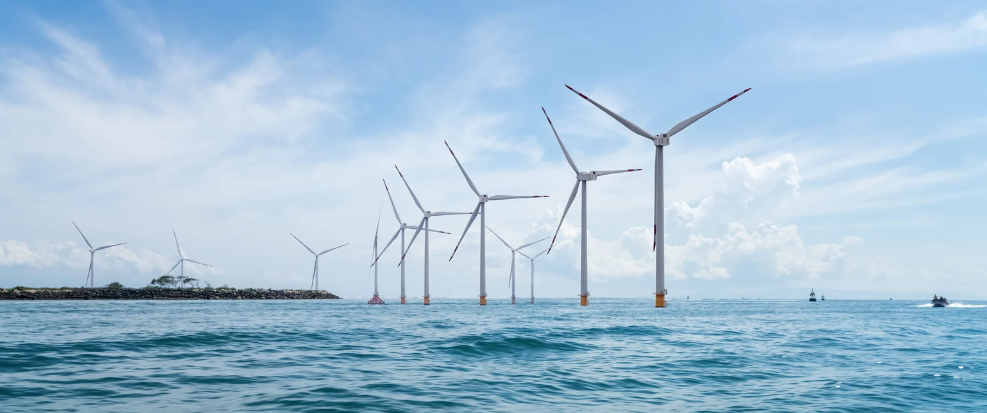
Ørsted fundamentally reinvented its business by moving from fossil fuels to offshore wind. Michelin has evolved from manufacturing tyres to helping customers improve fleet efficiency through data and services.
These are not good “sustainability programmes”. They are examples of business model innovation. Sustainability became the catalyst for rethinking how mutual value could be created, rather than simply how impacts could be reduced and profit squeezed.
These examples point towards three practical shifts for sustainability leaders to consider.
First, move from managing impacts to identifying meaningful challenges. Sustainability teams have become highly effective at understanding risks and externalities.
“The next generation of sustainability leaders will be judged by their ability to help create new sources of value, not simply protect existing ones”
The next opportunity is to start with the societal or environmental challenge itself, asking where your organisation is uniquely positioned to contribute. Those challenges can become the basis for innovation, new products and entirely new business models. The key shift is to design around the impact outcome, not your company’s existing products and services.
Second, move from sustainability strategy to integrated business strategy. The most significant opportunities are not within the sustainability function, separate from the core business. They emerge through decisions about where to operate, which customers to serve and where to invest. Sustainability leaders therefore need to influence commercial strategy, product development, procurement and operations.
Third, move from organisations to ecosystems. Companies do not create value in isolation. Many of today’s commercial opportunities — from regenerative agriculture and circular manufacturing to healthier workplaces and resilient supply chains — depend on partnerships across suppliers, governments, communities, investors and civil society. You may have less direct power and more complexity, but that is the unavoidable reality of mutual value creation.
Governance, disclosure and risk management will remain essential, but they are not, on their own, a strategy for value creation. The next generation of sustainability leaders will be judged by their ability to help create new sources of value, not simply protect existing ones.
If mutual value creation is to become more than an aspiration, sustainability teams will need a different set of capabilities.
They will need to identify adjacent, meaningful challenges that align with their organisation’s distinctive strengths. They will need to work with strategy teams to redesign business models. And they will need to work across companies, bringing together multiple stakeholders to create value that no single business could deliver alone.
The question is no longer whether sustainability should create value, but whether organisations have developed the capabilities to do so.