Can Social Connection Be a Strategic Capability?

August 2026 | Economics of Mutuality Experts Series
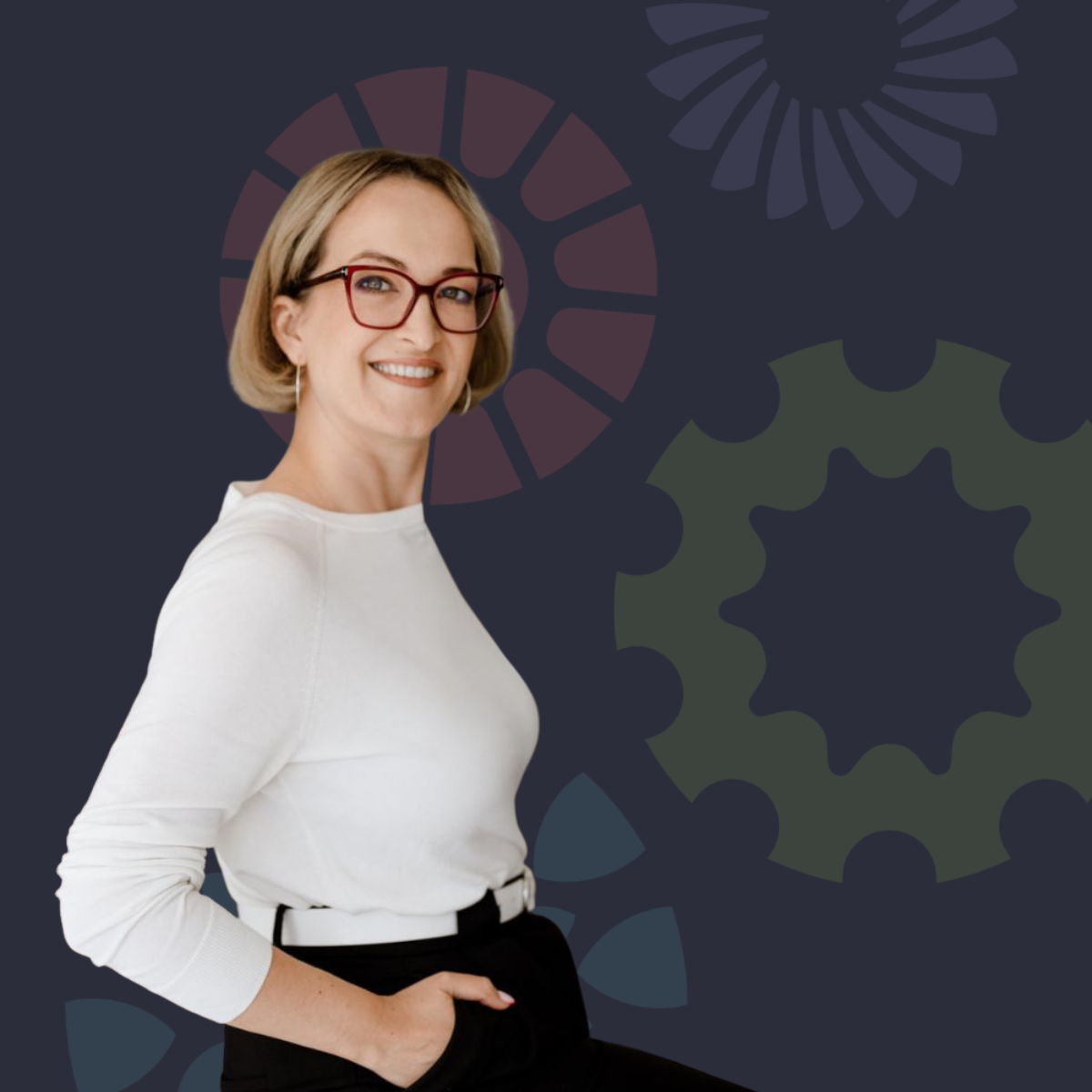
A Conversation with Deborah Madelaine
For Deborah Madelaine, Community and Culture Change Impact Lead at Mars, one of the capabilities that will matter most to organizations in the future is deceptively simple: the ability of people to come together.
After 14 years at Mars, Deborah has travelled an unusual career path. Trained as an engineer, she began by designing packaging that would ultimately be sold in millions of units around the world. Today, her focus is on helping people build the relationships and capabilities they need to learn and solve problems together.
Recently, Deborah attended a number of our events and workshops, where she explored the Economics of Mutuality approach. Its holistic view of value creation resonated with her own experience of social learning and how it deeply impacts business performance.
She describes her own evolution through different phases.
“I moved from ‘Ego 1.0’ to ‘Ego 2.0’, and now I’m in my ‘Ego 3.0’ phase,” she says. The first was about the satisfaction of creating things. The second asked, “How can we bring more ‘human’ into what we do?” Now, her focus is on equipping others to create connection.
Creating space for connection
For a business as large and diverse as Mars, the capability of creating human connection has strategic relevance.
Deborah describes Mars through the metaphor of a “House of Cultures.” Different businesses share a common foundation while retaining the characteristics that make them distinctive. Between them is a shared space where people can intentionally come together.
Mars already has many grassroots communities of practice. The question for Deborah was how connection could also be cultivated around strategic business challenges, drawing on the collective knowledge that already exists across the organization.
“How can we leverage this amazing collective knowledge in a way that is intentional?” she asks.
One response has been Peer Circles: groups of five or six people who meet for 90 minutes each month over six months. Participation is voluntary and members decide together what they need to learn based on the challenges they face.
“They’re not passengers of learning,” Deborah says. “They’re driving their learning together.”
The quality of the relationships matters. Time is invested in establishing trust, while responsibility for the success of the Circle belongs to everyone rather than an external facilitator.
Seeing the value relationships create
The challenge is that much of the value created through relationships does not immediately appear in conventional business metrics.
Deborah’s team is exploring the Social Learning Value Creation Framework developed by experts Beverly and Etienne Wenger-Trayner that captures different layers of value, such as simply meeting people who understand the same challenges. “I hear it in my Circle. People say, ‘Oh, I’m not alone.’”
Other value emerges through action. Participants commit to trying something between sessions before returning to share what happened. Their individual experience then becomes learning for the group.
That can contribute to realized business outcomes in the short-term. But relationships can create value over much longer periods too.
“Maybe today we are both in a circle and then in a few years we get to work on a project together,” Deborah says. Because that relationship and trust already exist, “the project might take a different shape.”
This is where her experience of mutuality as a principle and approach connects particularly strongly with the work. “The learning is grounded in real business challenges,” she explains. “There’s a promise and expectation that it’s going to make a difference for the business as a result.”
At the same time, she sees social health as helping fuel that performance. It is a useful illustration of mutual value, where financial performance and positive impact reinforce one another over time, rather than being treated as competing objectives.
A capability for the AI era
For Deborah, the need to invest in this relational fabric is becoming more urgent as work becomes increasingly digital.
She describes AI as “a beautiful, magical thing that’s happening” while questioning whether organizations are investing equally in human connection.
“It is important to continue investing as much in how we build the relational fabric of the organization as we are in making sure everybody’s got an AI companion.” But the question is not about choosing human connection instead of technology – its about recognizing they focus on different things.
Social learning is “about building the capacity and capability of being together in a world where we’re more fragmented than ever.”
Starting small, scaling intentionally
Mars is now expanding the Peer Circles into areas including line management, innovation, and acquisition integration, while exploring opportunities in sustainability.
“The dream vision is that everybody at Mars could start a Circle or join a Circle,” Deborah says. “So this muscle of coming together, of learning from each other’s experience, would be part of our culture.”
And perhaps, eventually, it could extend beyond the company itself: “Why don’t we start Circles with external partners and start pollinating across industries when it makes sense?”
But for all that ambition, Deborah returns to something deliberately simple: “It starts in small groups. It needs to be intentional.”
In a world of AI, hybrid work, and constant organizational change, creating enduring value may depend not only on what people know, but on their ability to trust, learn and make sense of challenges together.
The capability of being together may be one of the most human capabilities an organization can build, and one of its most valuable.
Are you a leader with a deep conviction that business should be a force for good? Our Leading With Purpose executive education program could for you.
Delivered online over 9-weeks, the course is grounded in the practical Economics of Mutuality operating model, which has been developed with leading companies and universities including Mars and Oxford University’s Saïd Business School.
Since its inception, it has helped over 500 senior business leaders and investors integrate social and environmental impact into their core business strategy.
You can now register your interest for our 2027 cohort! Find out more via link below.
If you want to speak to a member of our team about joining the program, please contact Liam Sharkey at Liam.Sharkey@mutualvaluelabs.com