Powering Possibility

February 2026 | Economics of Mutuality Experts Series
A Conversation with Dorian Wrigley
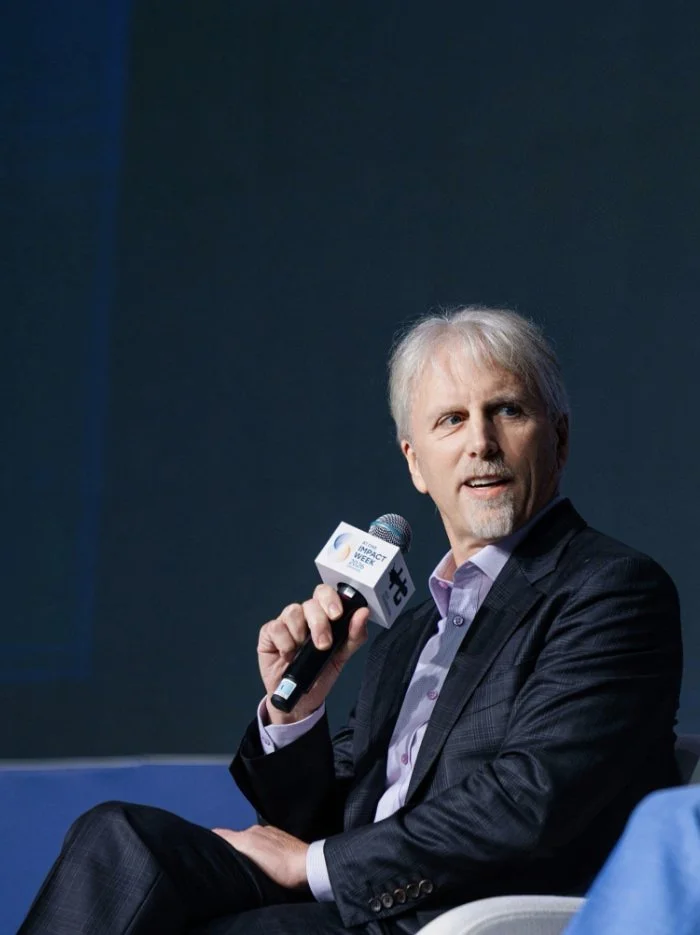
Dorian Wrigley leads Peco Power, a company in Johannesburg, South Africa dedicated to tackling energy poverty through an off-grid electrification system that grows with the needs of a household. In a continent where around 600 million people still lack access to formal electrification, he sees energy not as a commodity, but as a foundation for dignity, opportunity, and human flourishing.
“Just taking candles and paraffin out of homes and replacing them with safe, reliable light is huge,” he reflects. “From there, you can build to TV, refrigeration, charging phones. It’s basic, but it’s the beginning of economic participation.”
A Career Preparing for a Challenge
Trained as an engineer, Dorian quickly realized he didn’t quite fit the mould. Going from roles in investment banking to strategy consulting helped him learn different skills such as analytical rigour, financial structuring, and systems thinking. At the time, they all felt like separate careers but looking back, he sees them as preparation for the present.
In 2017, Dorian came across some technology research at Wits University that would set him on a trajectory to unite all of these career strands into one innovative business. He instantly knew he had found something special and by 2019, he had partnered with the university to commercialize their research into what would become the core technology of Peco Power: the PowerBrick™.
The PowerBrick™ is a solar powered smart energy solution for communities requiring electrification. It is a modular, plug-and-play system that allows families to start with something as simple as lighting, then expand gradually until they can power an entire household without having to discard or replace earlier components.
This circular-economy approach is designed to avoid obsolescence: each upgrade builds on what already exists, keeping materials in use and reducing waste. It reflects the belief that people excluded from formal infrastructure deserve long-term, high-quality solutions, not temporary fixes.
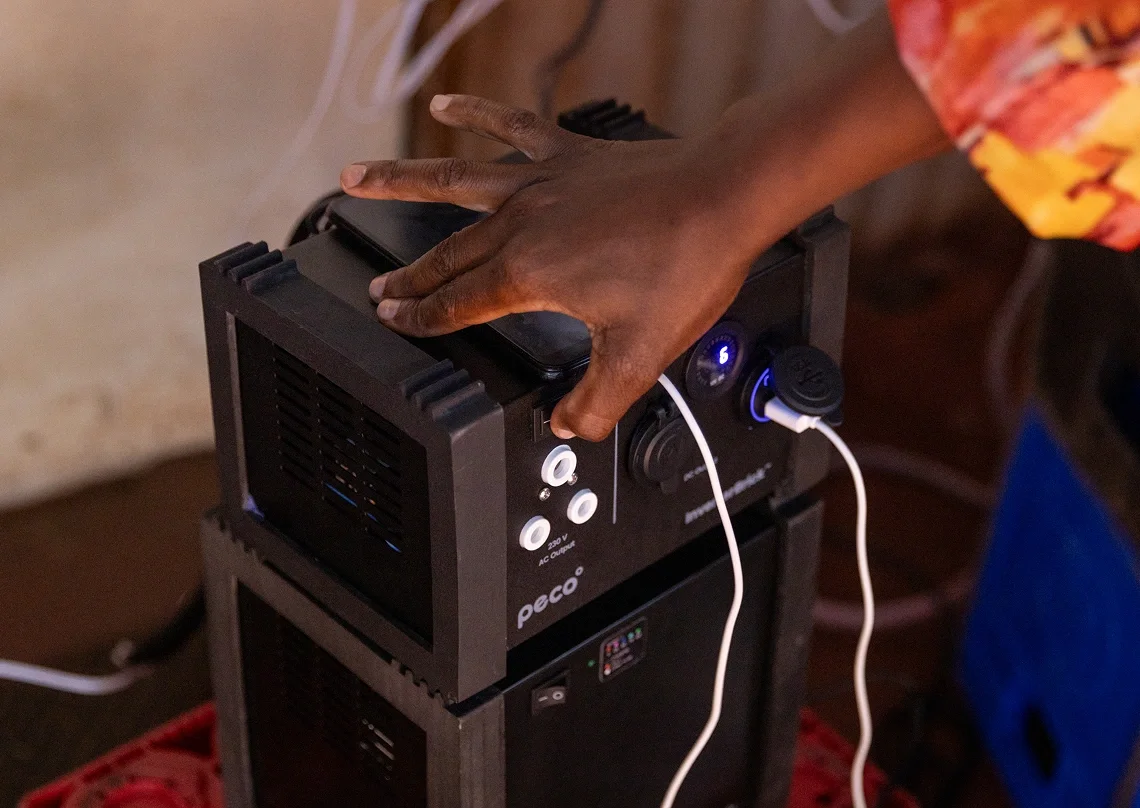
The PowerBrick in use
From Values to a Meaningful Challenge
Dorian’s introduction to the Economics of Mutuality approach came through Professor Colin Mayer’s formulation that the purpose of business is to solve the problems of people and planet profitably, and not profit from creating those problems. That simple reversal in what is often the business norm prompted deep reflection. Dorian reflects that “this simple concept really got me thinking. What does good business look like? To what extent have my own business activities been positive, negative, or neutral?”
The Leading With Purpose program gave him a structured way to delve deeper into the Economics of Mutuality approach and translate that reflection into practice. A significant moment for him on the course involved an exercise analyzing different kinds of purpose and mission statements. He realized that Peco Power’s own mission was, at best, values-driven, rather than being truly purpose-driven. It spoke about low-cost electrification systems, but it did not clearly name a meaningful challenge: how the business was solving a challenge for people or planet.
“That has been one of the key ways the program has impacted my leadership,” he explains. “It’s not just about a cool product. It’s about how to solve energy poverty, how to transform communities; how to capture that in a mission that moves people.”
Purpose, in this sense, is not a slogan on a wall. It is a strategic question that shapes business model design, stakeholder relationships, and the daily choices of a team.
Building an Ecosystem of “Champions”
One of the most visible expressions of this thinking is Peco Power’s “champion” model.
At the centre, the company employs a relatively small team of around 15 people at its manufacturing facility and head office. But the real engine of growth lives in the communities themselves; local champions who act as sales agents, educators, and trusted guides.
This model was inspired by the Leading With Purpose course’s focus on stakeholder ecosystems and pain points. Instead of treating energy access as a purely technical challenge, Peco Power looked at the full community ecosystem and identified where trust, knowledge, and affordability barriers were blocking adoption. Champions emerged as a practical solution to leverage people already embedded in the community and help bridge those gaps, while driving adoption of the technology at the same time
Unemployment in many South African communities hovers around 30%. Wealth-creating opportunities are scarce, and traditional distribution models concentrate economic benefit at the centre.
“We asked ourselves instead of keeping all the economic activity at head office, how do we move as much of it as possible into the communities?” Dorian recalls.
Finding and equipping champions, often unemployed, sometimes with limited formal education, is slower and more complex than shipping products from a warehouse. But it brings a different quality of relationships.
When a trusted neighbor explains how a system works, installs it, and benefits economically from its success, something shifts. The technology is no longer an external intervention, it becomes something the community can own, making it more equitable and enduring.
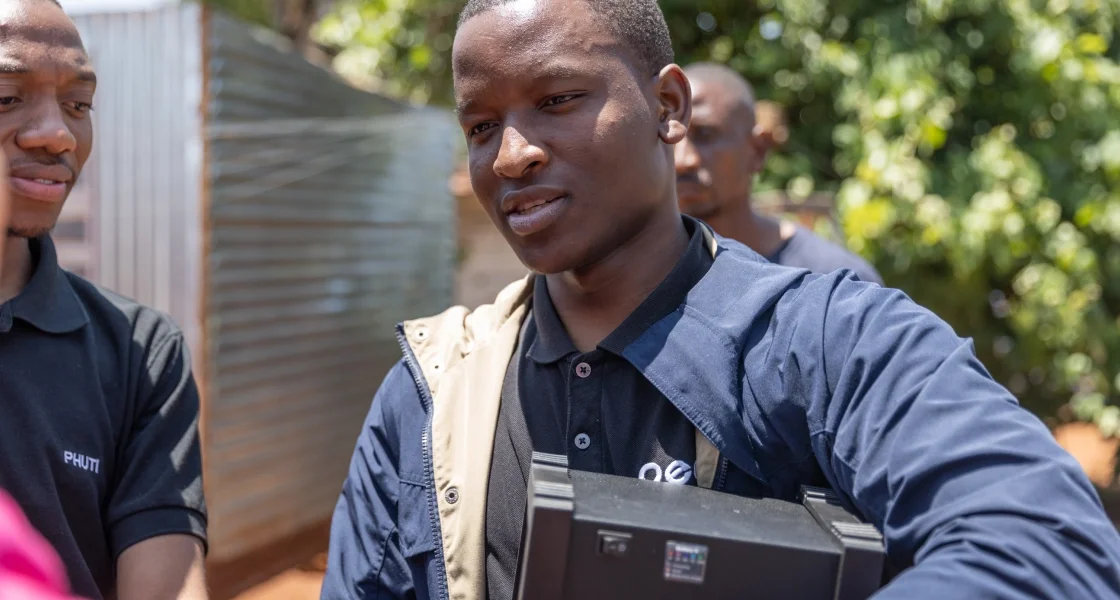
Peco Power champions in action
Designing for Mutual Value: Product, Model, and Finance
When Dorian steps back, he sees three interlocking elements that make Peco Power’s approach work.
First is the PowerBrick™ product: a robust, modular system designed to last up to 25 years and grow with a household, avoiding the waste of replacing equipment as needs change.
Second is the business model: the champion network that pushes economic opportunity into communities rather than pulling it back to head office.
The third element is finance. Here, mutuality shows up in how risk is understood and shared. For many financial institutions, lending into rural communities with limited formal records is perceived as high risk. Dorian and his team came up with a solution to measure and manage risk where little data is available.
PowerBricks™can be offered on a rent-to-own basis. Instead of large upfront loans, households pay small, regular amounts over time. The PowerBrick™ system automatically locks every 30-days, acting as a reminder to customers when a payment is overdue. Upon receipt of the next rent-to-own instalment, a code is sent via SMS to the customer, who can unlock their system for another month, much like prepaid electricity.
Because the monthly cost is set lower than what families would typically spend on candles and paraffin, it remains affordable. And because smartphones and digital payment mechanisms are widespread even in rural areas, people can easily make those payments and receive support - provided, of course, that they can charge their phones, which brings the system’s significance full circle.
In this way, risk is mitigated for lenders, access is improved for customers, and Peco Power can pursue its meaningful challenge of alleviating energy poverty at scale.
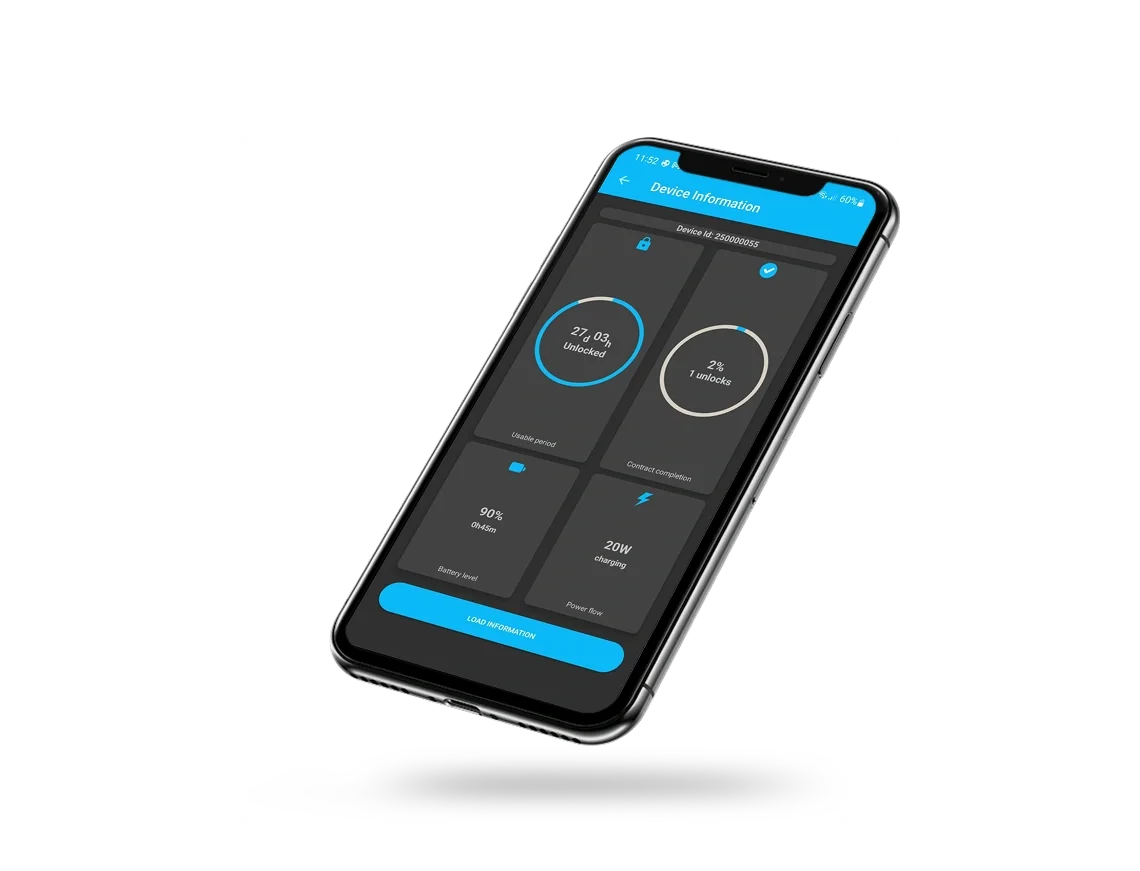
The PowerBrick app, which helps communities staying on top of their energy consumption and payments
From Dualism to Integration
Underpinning all of this is a shift in how Dorian thinks about the role of business.
For many years, he viewed “doing well” and “doing good” as separate tracks. First, maximize profit; then, once there is surplus, decide how to be generous with it. That dualistic model never fully sat comfortably with him, but he lacked a practical alternative.
Through the Economics of Mutuality approach, he saw that business does not need to choose between being commercially successful and socially useful. In fact, it is strongest when those aims are integrated.
For Dorian, it is a lifelong commitment: to encourage, to listen, and to prove that business can help shift society toward a better future for all stakeholders.
Are you a leader with a deep conviction that business should be a force for good? Our Leading With Purpose executive education program could for you.
Delivered online over 9-weeks, the course is grounded in the practical Economics of Mutuality operating model, which has been developed with leading companies and universities including Mars and Oxford University’s Saïd Business School.
Since its inception, it has helped over 500 senior business leaders and investors integrate social and environmental impact into their core business strategy.
Applications are open for our 2026 cohort! Find out more via link below.
Program dates: April 20 – June 26
Application deadline: March 20
If you want to speak to a member of our team about joining the program, please contact Liam Sharkey at Liam.Sharkey@mutualvaluelabs.com