Family Enterprise, Mutual Value, and the Future of Economic Flourishing in Latin America
May 2026
Reflections by Jay Jakub, Executive Director of the Economics of Mutuality Foundation
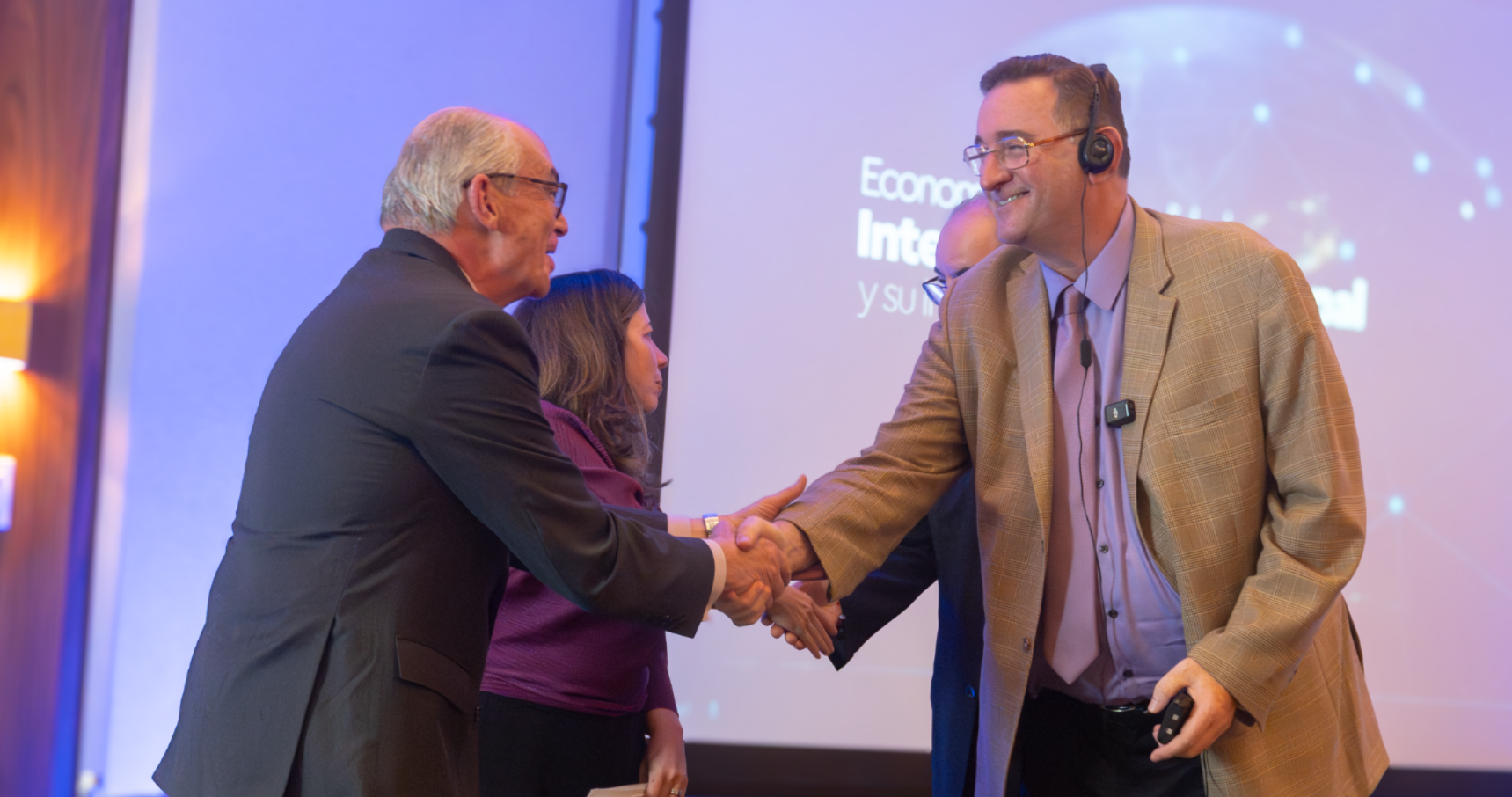
This month, I had the privilege of participating in a special gathering in Bogota on the Economics of Mutuality with more than 100 members of Family Offices in Colombia (many thanks to Andres and Martin Gilberto Ibarra and to their Family Office, and to Raul Serebrenik, for organizing and hosting such a vibrant event.) I was deeply moved and humbled to be able to share learnings and exchange views with so many vibrant leaders of Colombia’s economy.
One of the more encouraging developments I observed is the strong and growing interest among family-owned enterprises, investors, philanthropists and educators in business models that create mutual value for stakeholders and can be a catalyst for place-based systemic transformation to bring flourishing.
What stood out throughout the conversations in Bogota was a shared recognition that many of the challenges facing societies today cannot be addressed with traditional economic approaches alone and absent robust multi-stakeholder collaboration.
This is not merely a question of corporate responsibility, but rather a systemic question about the future role of business in society. The Economics of Mutuality approach begins from the premise that long-term business performance is deeply interconnected with the health of the broader ecosystems in which companies operate and opportunities for impact-driven performance reside. Employees, suppliers, communities, natural systems, and local institutions are not externalities to business performance; they are foundational contributors to it.
For family businesses in particular, this perspective often resonates intuitively. Unlike many publicly traded enterprises operating under short-term market pressures, family-owned enterprises frequently maintain a stronger connection to purpose, place, community, legacy, and intergenerational stewardship. In many parts of Latin America, they remain among the most influential economic and social institutions within local ecosystems. Working together, they can be a tremendously powerful force for change.
At the same time, family-owned enterprises are navigating increasingly complex transitions:
How to modernize while preserving values
How to remain globally competitive while strengthening local resilience
How to generate financial performance without contributing to social fragmentation or environmental depletion
What excited me most in Colombia was not simply the level of interest in these ideas, but the seriousness with which many leaders there have a sense of urgency and are open to practical pathways for implementation. Several members of the participating Family Offices in Colombia will continue these conversations with us next month in Portland, Oregon, at our event with Mutual Value Labs and SecondMuse Capital titled: Catalytic Capital: Transforming Local Economies for People and Planet. This will be an intimate gathering of investors and philanthropists exploring how we can help catalyze a shift from extractive to regenerative local economies.
I believe these cross-regional dialogues matter greatly, because the future of business will be shaped by ecosystems of businesses, investors, academic institutions, governments, and civil society actors learning how to create mutual value together.
Latin America has much to contribute to that future. And perhaps one of the most important questions now facing business leaders globally is this: How do we build economies that allow people, communities, nature, and private enterprise to flourish together over the long term?
These are the conversations we need more of and which we’re looking forward to convening in Portland next month and beyond.