Re-Centering Leadership Around Wellbeing: Key Insights From Masterclass With Dr. Victoria Hurth

May 2026 | Masterclass
Across industries, leaders are increasingly confronting a difficult reality: the systems shaping modern business are often rewarding behaviors that undermine the very conditions people and societies need to thrive.
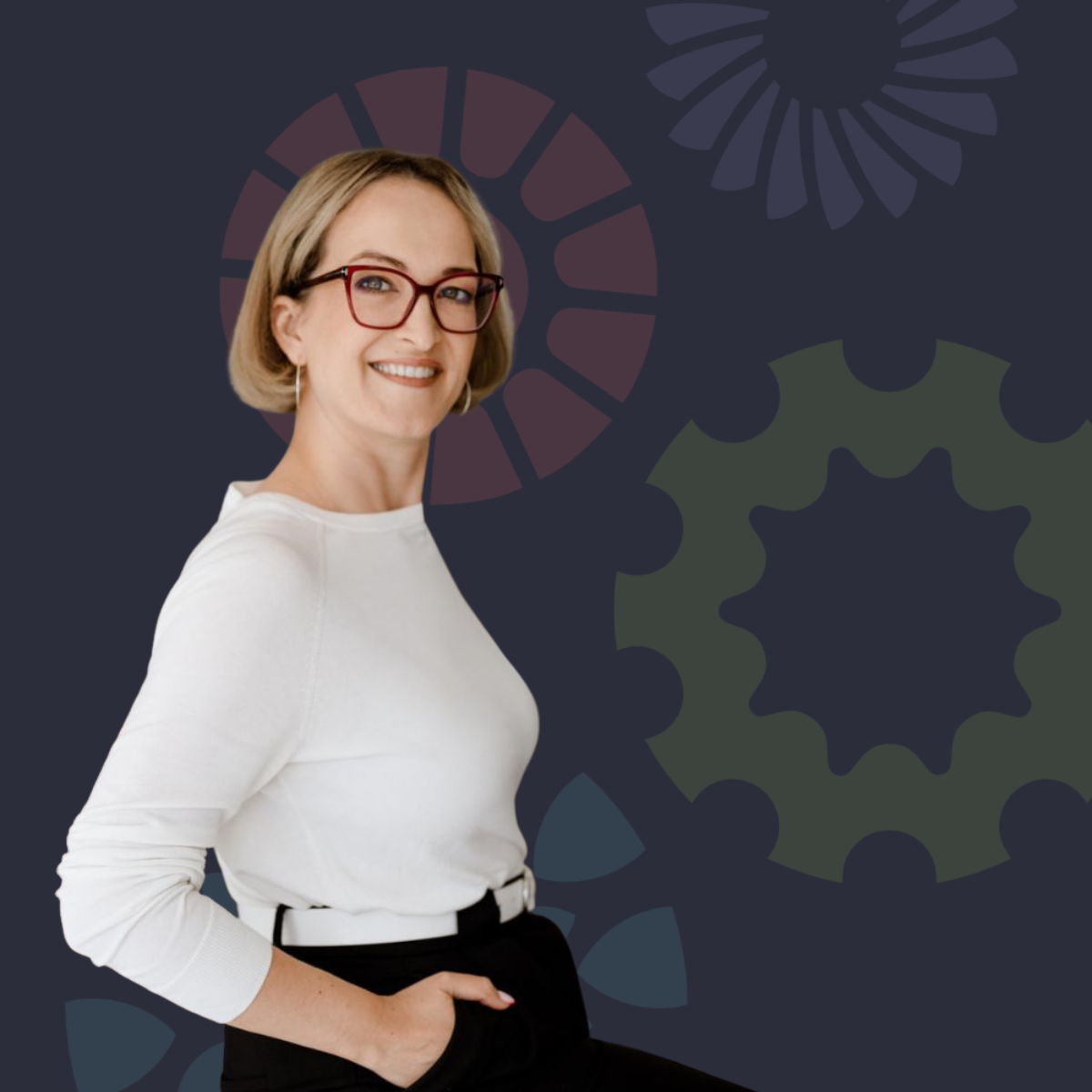
This was the focus of a recent masterclass hosted by Mutual Value Labs, featuring Dr. Victoria Hurth, co-author of Beyond Profit: Purpose-Driven Leadership for a Wellbeing Economy, in conversation with Ruth Wilkinson, Strategic Lead at Mutual Value Labs.
The session explored what it means to practice leadership in service of a wellbeing economy – not as an abstract ideal, but as a practical challenge facing organizations today.
A central theme throughout the discussion was the growing mismatch between what organizations measure and what actually creates value that matters. While wellbeing is widely recognized as essential to healthy economies and societies, many organizations still operate according to short-term financial performance logics that prioritize efficiency, growth, and quarterly results above resilience, trust, and human flourishing. This can put the innovation we out of sight and in many cases – the irrational choice.
As Dr. Hurth noted
“wellbeing must move from being an aspiration to an organizing principle.”
This shift requires more than adding wellbeing initiatives onto existing structures. It calls for rethinking how organizations define success in the first place and questioning the inherited assumptions that continue shaping economic systems today.“We’re all on a ship together as humanity,” Dr. Hurth explained, noting that “the ship has a wheel and a rudder that has been set by previous generations.” Many of the assumptions driving organizations today, she argued, have become so embedded that “many of us don’t even realize we’re on a ship – let alone where its navigation system is (governance) and where we should turn it to (purpose governance).”
The metaphor became a powerful way of illustrating how systems perpetuate particular outcomes. Leadership assumptions about value, risk, performance, and growth shape organizations often invisibly – through governance structures, incentives, reporting systems, and definitions of success that reinforce short-term extraction rather than long-term stewardship.
This discussion also connected to the growing relevance of governance frameworks such as ISO 37011, which reframes governance not simply as oversight and compliance, but as a means of generating long-term wellbeing for the world through an organizational purpose. The framework reinforces many of the themes explored during the session – particularly the idea that governance should support generating and protecting value for the end goal of the economy and business - long-term societal wellbeing (i.e. flourishing or the ‘good life’), rather than focusing innovation on financial income, which a symbolic good that is a vital means to an end but never an ultimate goal.
At the same time, the session resisted the idea that leaders are powerless within these systems. Dr. Hurth reminded participants that “we are the wind in the sails” – a reflection of the fact that everyday decisions, behaviors, and organizational norms collectively shape the direction economies take – we govern ourselves as leaders, as citizen’s we are the ultimate governing body of nations and the world, and that in any organization we have both management and governance roles to play.
This perspective closely aligns with the Economics of Mutuality approach, which focuses on creating mutual value across financial, human, social, and natural dimensions rather than treating them as competing priorities.
The conversation also challenged the tendency to position wellbeing as a side agenda or ethical add-on and instead the point of an economy. Participants explored what changes when collective wellbeing becomes the lens through which decisions are governed – in turn shaping strategy, culture and operations.
This means asking more fundamental questions:
What is the organization ultimately aiming to achieve with the resoruces it accesses and how valuable is this?
Who benefits from the value it creates?
What trade-offs are embedded within current business models. Do decision-makers understand the tradeoffs they face and are able to justify they decisions against them?
How are long-term human and societal outcomes being valued in decision-making?
The discussion strongly reinforced that purpose-driven leadership is not primarily about rhetoric or branding.
“Purpose is not what sits alongside business strategy,” Dr. Hurth argued.
“It is the value generation goal that, along with value protection goals, frames all strategy”.
Throughout the masterclass, participants surfaced the notion that leadership for a wellbeing economy is an operational discipline. It involves making different choices about what gets measured, rewarded, prioritized, and protected over time.
Importantly, the session acknowledged the genuine tensions leaders face while operating within systems dominated by short-term financial priorities. Rather than promoting simplistic solutions, the conversation focused on where leaders still have agency – particularly through culture, governance, incentives, and long-term decision-making – and most powerfully how they govern themselves to be purpose-driven leaders.
The clearest takeaway from the session was that the challenge facing organizations today is one of governance – direction, oversight and accountability for decisions leaders make. The task for leaders is to be in their position in the current system while also innovating governance systems at all levels toward serving the wellbeing of people and planet.
“The only way not to take life on Earth over a cliff … is to turn that ship and that rudder towards purpose governance – governance of long-term wellbeing for all” concluded Dr. Hurt.
As organizations continue navigating uncertainty, complexity, and declining trust, the masterclass offered a timely space to explore how the future of leadership will logically require us to create the conditions in which people, organizations, and societies can thrive together.
To stay up to date with future masterclasses and events, sign up for our newsletter.