June 2026 | Economics of Mutuality Experts Series
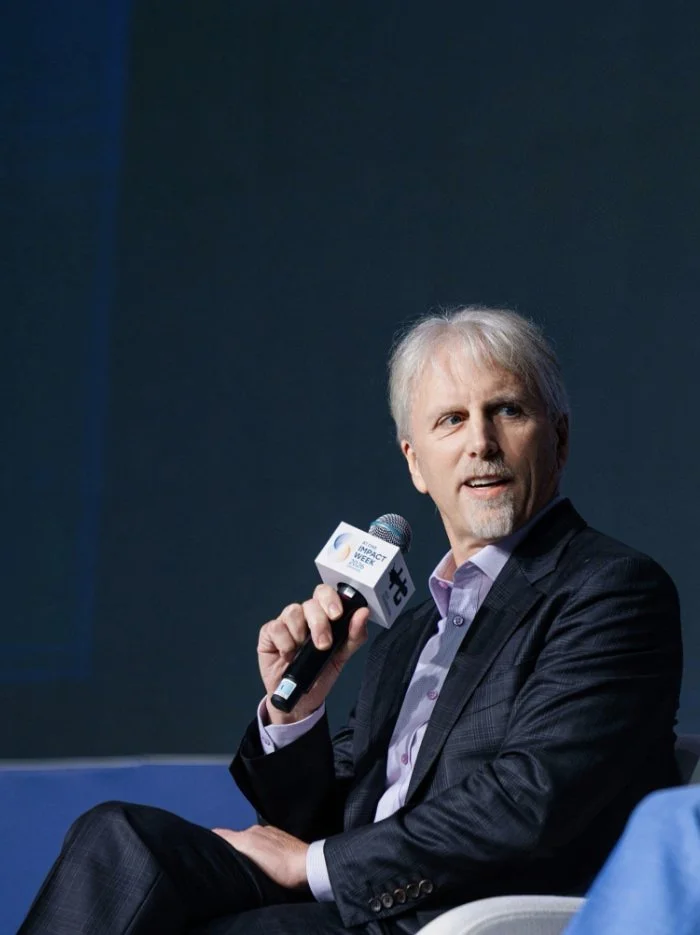
A Conversation with Howard Langer
Howard Langer’s motto is “pricing better for profit, people and the planet”.
Having worked in functions where the conversation is dominated by numbers, Howard knows that success is measured with precision, and decisions are expected to deliver tangible financial results. Revenue management is the discipline that sits behind pricing, promotions, customer negotiations, and profitability. It is a world of forecasts, margins, volume targets, and commercial trade-offs.
Which is why, on the surface at least, it seems an unlikely place to begin a conversation about sustainability. Yet it is precisely because of this that Howard has become increasingly interested in a question many organizations continue to struggle with: how do you stop sustainability from becoming a parallel agenda and instead make it part of how decisions are actually made?
The challenge is familiar. Most large companies now have environmental commitments, sustainability strategies, and long-term targets. At the same time, they are operating in increasingly difficult economic conditions, under pressure to deliver growth, manage costs, and meet short-term expectations. When those pressures collide, commercial priorities tend to win. As Howard puts it, "the financial challenge can easily swamp all of the other work that is being done elsewhere."
A Different Way of Approaching the Problem
One of the reasons the Economics of Mutuality approach resonated so strongly with Howard was that it offered a different way of tackling the problem. Rather than treating commercial performance and environmental impact as competing objectives, it encourages leaders to explore how the two might reinforce one another.
Instead of asking how sustainability can be protected from commercial pressures, the question becomes: how might commercial decisions contribute to environmental outcomes? For Howard, that shift became tangible through data. As he attended Leading With Purpose, the Economics of Mutuality leadership program, he became increasingly interested in how organizations use different forms of information to make decisions. Financial data sits at the center of most planning processes. Environmental data often sits elsewhere. What if those worlds could be connected?
What the Data Made Possible
Back at Mars, Howard began exploring what information already existed within the organization. In the process, he discovered that greenhouse gas emissions data was available at product level. "The light bulb went on for me that we could actually use this and bring it into our processes and thinking," Howard recalls. For the first time, he could imagine bringing environmental considerations into the same conversations that shape pricing, promotions, and revenue growth. Not as an additional report produced after decisions had been made, but as an input into the decisions themselves.
A promotional plan, for example, might generate strong sales growth while carrying a higher environmental impact. Another option might produce slightly lower returns but significantly lower emissions. Until both outcomes are visible, the trade-off remains hidden.
The point is not that environmental considerations should automatically override commercial ones. Rather, it is that leaders should be able to see the whole picture. That idea connects to another insight Howard took from the executive education program: the importance of seeing beyond the immediate transaction and understanding the wider system in which value is created.
Reflecting on a case study from earlier in his career, he recalls being struck by how many stakeholders influence the success of a business. Customers and shareholders are only part of the story. Suppliers, regulators, communities, local institutions, and countless others shape outcomes in ways that are often overlooked. "It wasn't just about the customers and the people working in the store," he says. "There was a whole ecosystem to understand." When leaders focus exclusively on financial outputs, important parts of those systems can become invisible. When they widen the lens, new opportunities begin to emerge.
Starting Before You Have the Answers
Howard knows this will not transform an organization overnight. The work is still exploratory. "We don't know where this is going to go," he says. "But it has to start somewhere."
Many leaders are waiting for certainty before they act. Yet meaningful change rarely begins with certainty. More often, it begins with a different question, a new source of data, or a small group of people willing to look at an old problem through a new lens.
Sometimes, that is enough to start changing the conversation. And changing the conversation is often where transformation begins.
Are you a leader with a deep conviction that business should be a force for good? Our Leading With Purpose executive education program could for you.
Delivered online over 9-weeks, the course is grounded in the practical Economics of Mutuality operating model, which has been developed with leading companies and universities including Mars and Oxford University’s Saïd Business School.
Since its inception, it has helped over 500 senior business leaders and investors integrate social and environmental impact into their core business strategy.
If you want to speak to a member of our team about joining the program, please contact Liam Sharkey at Liam.Sharkey@mutualvaluelabs.com