June 2026
According to our research, 83% of people look to their jobs as a source of connection. However, despite spending more time connected through technology than ever before, growing numbers of employees report feeling lonely at work.
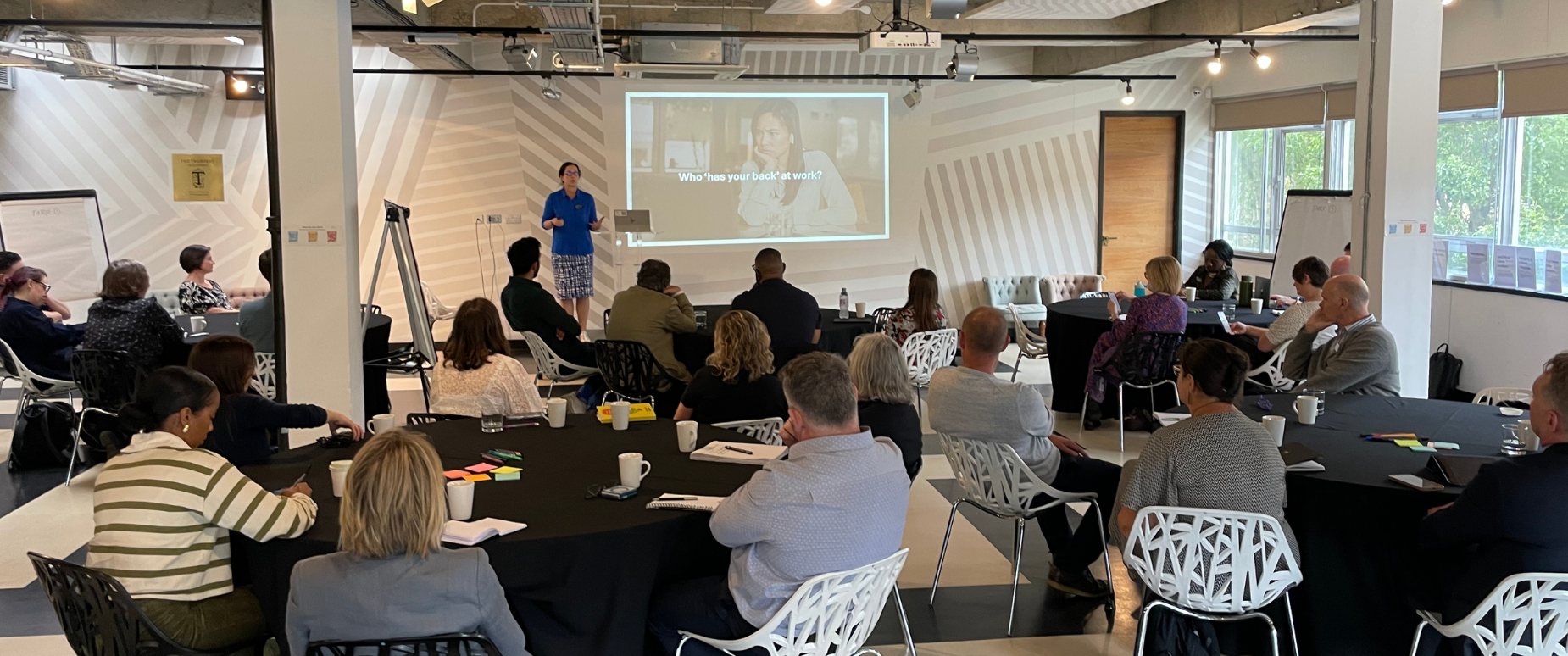
This challenge was the focus of the Social Health at Work Roundtable convened by the Economics of Mutuality Alliance and Sheffield University Management School in London recently. Bringing together academics and practitioners, the discussion explored why workplace loneliness matters, what drives it, and what organizations can do to cultivate stronger social health.
The research presented by Professor Sarah Wright of the University of Canterbury, New Zealand highlighted an important distinction: loneliness is not simply the absence of relationships. It occurs when a person’s need for meaningful connection is not being met. Someone can be surrounded by colleagues, attend meetings throughout the day, and still feel disconnected if they lack a sense of belonging, support, or genuine human connection.
The consequences extend far beyond individual wellbeing. Workplace loneliness has been linked to increased stress, reduced productivity, lower quality of work, and a significantly higher likelihood of employees leaving their organizations. Professor Wright shared that lonely employees are approximately 2.5 times more likely to leave their jobs than their more connected colleagues.[1] What is often perceived as a personal issue therefore has tangible implications for organizational performance and resilience.
Professor Wright challenged the idea that loneliness is simply a consequence of remote or hybrid working. While fully remote workers can experience higher levels of loneliness, the research shows that even the loneliest employees spend substantial time interacting face-to-face with colleagues. In one study, employees experiencing high levels of loneliness still spent almost half (47%) of their working time engaging with colleagues in person.[2] Physical proximity alone is not enough. Connection depends on the quality of relationships and the environment in which those relationships develop. In turn, those can have a critical effect on how an organization’s culture is shaped and also perceived.
Employees who reported low levels of loneliness were significantly more likely to describe their workplaces as caring, welcoming, and inclusive. Those experiencing high loneliness were more likely to characterize their cultures as transactional, biased, or hostile. The findings suggest that meaningful workplace connection is shaped less by formal initiatives and more by the everyday experience of trust, inclusion, and belonging.
For any organization, connection and belonging help enable employee wellbeing, performance, development, and growth. Connected employees are more likely to collaborate effectively, share ideas, access opportunities, and contribute fully to collective goals. In operationally complex organizations, strong social connections can reduce silos, strengthen trust, and make shared purpose more tangible in everyday work. In this sense, social health is not separate from business performance. It is one of the dimensions that makes sustainable performance possible.
The roundtable also explored the role of artificial intelligence. Many employees now use AI tools for coaching, mentorship, advice, and emotional support. Yet despite widespread adoption, loneliness remains prevalent. Professor Wright shared research which showed that 52% of AI users reported moderate or high levels of loneliness and only 12% believed AI was helping them feel less lonely.[3] While technology may provide valuable support, the evidence suggests it cannot replace the reciprocity and shared understanding that emerge through human relationships.
For leaders seeking to strengthen the social health of their organizations, the challenge is not simply to provide more opportunities for social interaction. Rather, it is to intentionally create the conditions in which meaningful connection can thrive. This requires embedding social health into the broader people and organizational strategy. Key elements include measuring and addressing loneliness, normalizing conversations about connection and belonging, supporting employees through periods of transition, and designing workplaces, cultures, and practices that foster a genuine sense of belonging.
As organizations navigate increasing complexity, uncertainty, and technological change, social health offers an important lens through which to rethink how value is created. By investing in trust, relationships, belonging, and shared purpose, organizations can create the conditions not only for stronger performance, but for the enduring value that emerges when people are able to flourish together.
[1] Cigna, 2020 Loneliness Factsheet; see McCarthy, et al (2025), Journal of Management; Ozcelik & Barsade, 2018, Academy of Management Journal; for a review of impact of loneliness on health, see Holt-Lunstad, et al., 2015, Perspectives on Psychological Science
[2] Wright, S. & Hadley, C. (2024). Work Loneliness Study
[3] Hadley, C. & Wright, S. (2026). "Can AI Help with Work Loneliness?"